Studio Harcourt


Studio Harcourt is a photography studio founded in 1933 by Cosette Harcourt at 11, rue Christophe-Colomb in Paris. In 1934, she joined forces with the Lacroix brothers, press bosses and Robert Ricci, son of Nina Ricci to found the Harcourt studio. It is known in particular for its black-and-white photographs of movie stars and celebrities, but having one's photo taken at Harcourt a few times during one's life was once considered standard by the French upper middle class.[1] The studio is currently located at 6, rue de Lota in the 16th arrondissement of Paris.
History
Harcourt Studio Photography is the result of the association of the brothers Lacroix and Germaine Hirschfeld (1900–1976) aka Cosette Harcourt,[2] a photographer who had worked in the studio of the brothers Manuel. Initially, the company produced images for the press, at a time when prestigious photo studios like Nadar closed for lack of clients.[3]
The change in direction came when Cosette Harcourt started to specialize in black-and-white glamour photography of figures from French cinema and culture,[3] always using 24 x 30 cm prints immediately recognizable for their distinctive style and lighting. This typical Harcourt style consists of a photo taken at close distance to the subject in its best light, generally creating a halo of light and dark, on a gray-to-black background. The attitude of the subject is personal, often wearing a slight smile, but somehow always seeming a little staged. Also, the Harcourt logo is featured prominently on every print.[1]
This Harcourt style[3] was inspired by the work of French cinematographer Henri Alekan.[2] Around the time of World War II, Cosette Harcourt, who was Jewish, married one of the Lacroix brothers.[3] Together they created a magazine, called Stars, to serve as an outlet for studio photos. During the occupation of France by the Nazis, German officers and many members of the Vichy regime visited the studios, just as the Americans did after the French Liberation.[3] After the war, Harcourt regained its momentum with movie star photography, continuing the tradition that made it successful initially.
In 2000, at the initiative of Jack Lang, the French state bought the photos of Studio Harcourt from between 1934 and 1991: about 5 million negatives of 550,000 persons and 1,500 celebrities.[2]
As of 2024, having an American portrait photo taken at Harcourt costs 995 Euros. However, a close-up traditional Harcourt portrait costs 1,995 Euros due to the extra makeup and lighting work needed to properly capture the subject's essence. An alternative is using one of the official Cabine Photo Luxe photo booths that take a picture for 10 euros and process it to achieve the Harcourt look.[4]
Gallery
- Photographs from Studio Harcourt
-
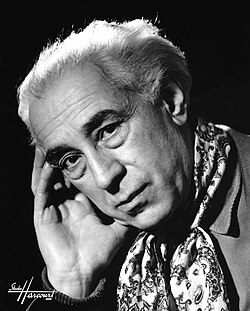 Abel Gance in 1957
 -
 Nathalie Baye in 1994
 -
 Carole Bouquet in 1995
 -
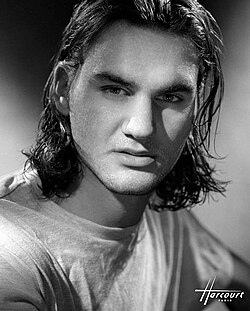 Roger Federer in 1998
 -
 Marion Cotillard in 1999
 -
 Patrick Bruel in 2002
 -
 Guillaume Canet in 2004
 -
 Laetitia Casta in 2005
 -
 Antoine de Caunes in 2005
 -
 Queen Rania of Jordan in 2005
 -
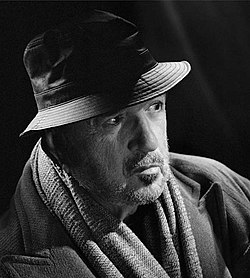 Jean-Claude Carrière in 2006
 -
 Julien Clerc in 2008
 -
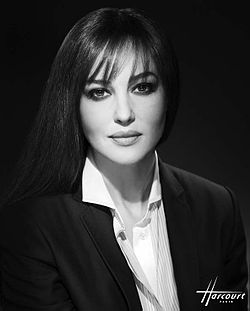 Monica Bellucci in 2008
 -
 Pierre Arditi in 2009
 -
 Claire Chazal in 2009
 -
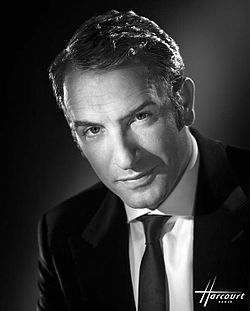 Jean Dujardin in 2009


References
- ^ a b Lehnartz, Sascha (4 April 2010). "Götter, gut ausgeleuchtet". Die Welt (in German). Retrieved 26 March 2025.
{{cite web}}: CS1 maint: deprecated archival service (link) - ^ a b c Biétry-Rivierre, Éric (10 September 2009). "Harcourt, soixante-quinze ans de classicisme". Le Figaro (in French). Retrieved 26 March 2025.
- ^ a b c d e Guillot, Claire (7 November 2009). "Sous le glamour, le côté obscur du studio Harcourt". Le Monde (in French). Retrieved 26 March 2025.
- ^ Hauer, Caroline (1 October 2011). "Coup de coeur : Harcourt, la Cabine Photo de Luxe [qui n'est pas une cabine de la société Photomaton, heureux les avocats?]". Paris la Douce (in French). Archived from the original on 24 August 2019. Retrieved 18 July 2021.
External links

- Official website
- Photo Studio Harcourt on YouTube (video about the studio by Deutsche Welle)

Content Disclaimer
Informasi ini disarikan dari Wikipedia dan disajikan kembali untuk tujuan edukasi. Konten tersedia di bawah lisensi CC BY-SA 3.0. Kami tidak bertanggung jawab atas ketidakakuratan data yang bersumber dari kontribusi publik tersebut.
- The information displayed on this website is sourced in part or in whole from Wikipedia and has been adapted for the purpose of restating it. We strive to provide accurate and relevant information, however:
- There is no guarantee of absolute accuracy. Wikipedia is an open, collaborative project that can be edited by anyone, so information is subject to change.
- It is not intended to constitute professional advice. The content displayed is for informational and educational purposes only. For important decisions (e.g., medical, legal, or financial), please consult a professional.
- Content copyright. Wikipedia is licensed under the Creative Commons Attribution-ShareAlike License (CC BY-SA). This means that content may be reused with appropriate attribution and shared under a similar license.
- Responsible use. Any risk arising from the use of information from this website is entirely the responsibility of the user.