Optical format
Optical format is a hypothetical measurement approximately 50% larger than the true diagonal size of a solid-state photo sensor. The use of the optical format means that a lens used with a particular size sensor will have approximately the same angle of view as if it were to be used with an equivalent-sized video camera tube (an "old-fashioned" TV camera). In a video camera tube, the diagonal of the actual light-sensitive target was about two-thirds the outside diameter, which was the measure used.
The optical format is approximately the diagonal length of the sensor multiplied by 3/2. The result is expressed in inches and is usually (but not always) rounded to a convenient fraction. For instance, a 6.4x4.8 mm sensor has a diagonal of 8.0 mm and therefore an optical format of 8.0*3/2 = 12 mm, which is expressed as 1⁄2 inch in imperial units. The reason it is expressed in inches is historical, dating back to the early days of television. [1]
Many image device sheets do not list the actual optical format but do list the size of their pixels in terms of micrometers; a helpful equation can be used to convert the pixel size and array size directly to optical format. The equation for this is:
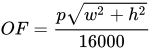
with:
- w = width of array (in pixels)
- h = height of array (in pixels)
- p = pixel size (micrometers)
See also
References
- ^ http://www.dpreview.com/news/2002/10/7/sensorsizes (table of sensor sizes at bottom)
 | This optics-related article is a stub. You can help Wikipedia by adding missing information. |
Content Disclaimer
Informasi ini disarikan dari Wikipedia dan disajikan kembali untuk tujuan edukasi. Konten tersedia di bawah lisensi CC BY-SA 3.0. Kami tidak bertanggung jawab atas ketidakakuratan data yang bersumber dari kontribusi publik tersebut.
- The information displayed on this website is sourced in part or in whole from Wikipedia and has been adapted for the purpose of restating it. We strive to provide accurate and relevant information, however:
- There is no guarantee of absolute accuracy. Wikipedia is an open, collaborative project that can be edited by anyone, so information is subject to change.
- It is not intended to constitute professional advice. The content displayed is for informational and educational purposes only. For important decisions (e.g., medical, legal, or financial), please consult a professional.
- Content copyright. Wikipedia is licensed under the Creative Commons Attribution-ShareAlike License (CC BY-SA). This means that content may be reused with appropriate attribution and shared under a similar license.
- Responsible use. Any risk arising from the use of information from this website is entirely the responsibility of the user.