Lost Mosque
| Lost Mosque | |
|---|---|
সাহাবায়ে কেরাম মসজিদ | |
 The mosque in 2018 | |
| Religion | |
| Affiliation | Islam |
| Mosque | |
| Status | Active[1] |
| Location | |
| Location | Panchagram, Lalmonirhat, Lalmonirhat Sadar Upazila, Rangpur Division |
| Country | Bangladesh |
  Location of the mosque in Bangladesh | |
| Coordinates | 25°51′36″N 89°30′21″E / 25.859893°N 89.505807°E |
| Architecture | |
| Type | Mosque architecture |
| Style | Islamic |
| Founder | Companion Sa'd ibn Abi Waqqas |
| Completed | 69 AH (688/689 CE) |
| Specifications | |
| Length | 6.4 m (21 ft) |
| Width | 3 m (9.8 ft) |
| Inscriptions | One |
| Materials | Brick; terracotta |
The Lost Mosque also known by its official name, Jame' As-Sahaba (Bengali: সাহাবায়ে কেরাম মসজিদ) is an ancient mosque located in Panchagram, in Lalmonirhat District, in Rangpur Division of Bangladesh.[2] A inscription discovered claims the mosque to be built in 69 AH (688/689 CE).[3]
History
For many years, there existed a desolate jungle in Ramdas Mouza of Panchagram Union, Lalmonirhat district. The locals called this jungle 'Majder Ara,' where 'Ara' signifies a dense, wild area. While clearing the jungle, ancient bricks were discovered. As the soil and bricks were further removed, the foundation of a mosque was unearthed. A study of an ancient inscription found there revealed that the mosque was established in 69 AH (688/689 CE).[4]
Inscription
A 15.2-by-15.2-by-5.1-centimetre (6 in × 6 in × 2 in) inscription was discovered within the ruins of the mosque. The inscription was clearly written in Arabic, stating "La ilaha illallah Muhammadur Rasulullah, Hijri year 69".[5] This historical artifact is now housed in the Tajhat Museum located in Rangpur.[6][7]
Research
In early 1987, locals alerted journalists and researchers about the discovery of the lost mosque. Subsequently, over a hundred researchers, archaeologists, and historians flocked to the site for investigation.[8][9]
Tim Steel,[who?] an advisor at the Tiger Tourism Institution, conducted extensive research on the Lalmonirhat mosque.[10] According to traditional history, Sufis first arrived in the Chittagong region in the 10th century. The spread of Islam in East Bengal began through Sufis in the 11th and 12th centuries, and they are believed to have built the first mosques in the region. Therefore, the existence of a mosque so early in this area is quite astonishing.
Team Steel[who?] then contacted the American Institute of Archaeologists. Researchers specializing in Islamic history there pointed to the writings of several Roman and German historians, which mentioned Arab and Roman traders traveling to and from the Brahmaputra basin for maritime trade. Additionally, several ongoing studies have provided evidence that the Brahmaputra-Tista basin was one of the oldest international maritime trade routes in the world. Team Steel[who?] also received support from the research of Professor Shah Nawaz, an archaeologist who found evidence of an ancient city in Bhitargarh, Panchagarh. He believed that discovering the history of the mosque's construction might unveil another chapter in the relationship between the history of northern Bangladesh and world civilization.[11][12]
Gallery
-
 New mosque
 -
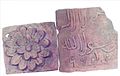 Inscription
 -
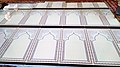 Main part
 -
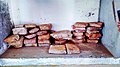 Ruins
Ruins -
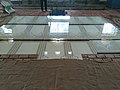 Main part
 -
 Ancient minbar
 -
 Current minbar
 -
 The prayer room and ruins, in 2021


.jpg)


_2021.jpg)
See also


References
- ^ "Companion Abu Waqqas built the 'Lost Mosque' of Lalmonirhat". Bangladesh Sangbad Sangstha. 3 November 2024. Retrieved 15 February 2025.
- ^ "Lost Mosque, Lalmonirhat Sadar Upazila". Bangladesh National Portal. Lalmonirhat.
- ^ "Ruins of a Lost Mosque". The Daily Star. 9 March 2013.
- ^ Nayeem. "Harano Masjid". Offroad Bangladesh.
- ^ "691 CE. ONE OF THE OLDEST MOSQUES IN THE WORLD. THE 'LOST MOSQUE' OF LALMONIRHAT, BANGLADESH". Bangladesh Unlocked. 19 February 2011.
- ^ "সাহাবি আবু ওয়াক্কাস গড়েছিলেন লালমনিরহাটের 'হারানো মসজিদ'". Somoy TV. 12 March 2024.
- ^ "Most Oldest Mosques in Bangladesh". 10 teacher. 15 March 2024.
- ^ "লালমনিরহাটের রহস্যময় 'হারানো মসজিদ'". Desh Rupantor. 20 September 2019.
- ^ "Remains of ancient mosque found in Bangladesh". Al Jazeera English. 18 August 2012.
- ^ "Lost mosque". Dhaka Tribune. 5 September 2013.
- ^ "১৩৩০ বছরের পুরোনো সাহাবা মসজিদ লালমনিরহাটে পুনঃনির্মিত হচ্ছে". Jago News 24. 4 February 2020.
- ^ "লালমনিরহাটে তেরশত ত্রিশ বছরের পুরোনো সাহাবা মসজিদ". Janakantha. 28 February 2020.
External links


Content Disclaimer
Informasi ini disarikan dari Wikipedia dan disajikan kembali untuk tujuan edukasi. Konten tersedia di bawah lisensi CC BY-SA 3.0. Kami tidak bertanggung jawab atas ketidakakuratan data yang bersumber dari kontribusi publik tersebut.
- The information displayed on this website is sourced in part or in whole from Wikipedia and has been adapted for the purpose of restating it. We strive to provide accurate and relevant information, however:
- There is no guarantee of absolute accuracy. Wikipedia is an open, collaborative project that can be edited by anyone, so information is subject to change.
- It is not intended to constitute professional advice. The content displayed is for informational and educational purposes only. For important decisions (e.g., medical, legal, or financial), please consult a professional.
- Content copyright. Wikipedia is licensed under the Creative Commons Attribution-ShareAlike License (CC BY-SA). This means that content may be reused with appropriate attribution and shared under a similar license.
- Responsible use. Any risk arising from the use of information from this website is entirely the responsibility of the user.