Helenium puberulum
| Helenium puberulum | |
|---|---|

| |
Scientific classification 
| |
| Kingdom: | Plantae |
| Clade: | Embryophytes |
| Clade: | Tracheophytes |
| Clade: | Spermatophytes |
| Clade: | Angiosperms |
| Clade: | Eudicots |
| Clade: | Asterids |
| Order: | Asterales |
| Family: | Asteraceae |
| Genus: | Helenium |
| Species: | H. puberulum
|
| Binomial name | |
| Helenium puberulum DC. 1836
| |
| Synonyms[1] | |
| |
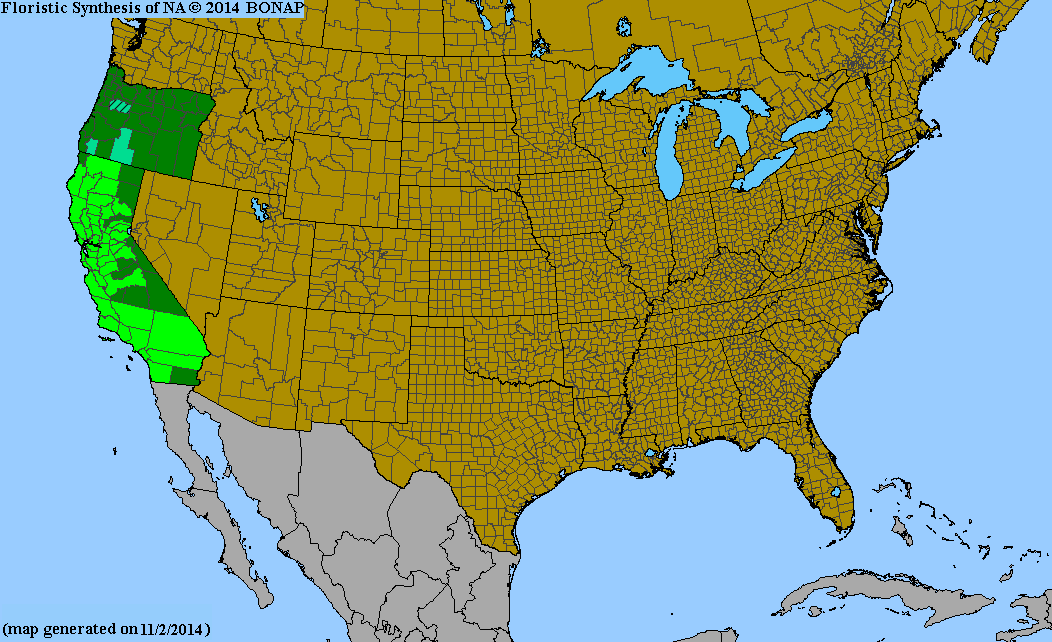
Helenium puberulum is a North American species of flowering plants in the daisy family known by the common name rosilla.[2] It is native to California and Baja California, where it can be found in moist habitats such as riverbanks and meadows. It has also been found in Oregon, although these might possibly be naturalized populations.[3][4]
Helenium puberulum is an annual or perennial herb sometimes as much as 160 cm tall though other times much smaller. Most of the leaves are on the lower part of the plant. Stems are winged, meaning that they have flaps of tissue running down the sides. One plant can produce as many as 30 flower heads in a branched array. The head is unusual in that the part covered by the disc florets is almost completely spherical rather than conical as in most other species of the genus. There can sometimes be over 1000 small disc florets in the head, each yellow at the bottom but brown or purple toward the tip. The 13-17 yellow ray florets are small and inconspicuous, pointing backwards down the flower stalk. Sometimes the ray florets are completely absent. The fruit is a hairy achene one to two millimeters long.[2]
References
External links
- Jepson Manual Treatment: Helenium puberulum
- United States department of Agriculture Plants Profile
- Helenium puberulum Calphotos Photo gallery, University of California
- Wildflowers in Santa Barbara
 Media related to Helenium puberulum at Wikimedia Commons
 | This Helenieae article is a stub. You can help Wikipedia by adding missing information. |
Content Disclaimer
Informasi ini disarikan dari Wikipedia dan disajikan kembali untuk tujuan edukasi. Konten tersedia di bawah lisensi CC BY-SA 3.0. Kami tidak bertanggung jawab atas ketidakakuratan data yang bersumber dari kontribusi publik tersebut.
- The information displayed on this website is sourced in part or in whole from Wikipedia and has been adapted for the purpose of restating it. We strive to provide accurate and relevant information, however:
- There is no guarantee of absolute accuracy. Wikipedia is an open, collaborative project that can be edited by anyone, so information is subject to change.
- It is not intended to constitute professional advice. The content displayed is for informational and educational purposes only. For important decisions (e.g., medical, legal, or financial), please consult a professional.
- Content copyright. Wikipedia is licensed under the Creative Commons Attribution-ShareAlike License (CC BY-SA). This means that content may be reused with appropriate attribution and shared under a similar license.
- Responsible use. Any risk arising from the use of information from this website is entirely the responsibility of the user.