Camera operator
A camera operator, or depending on the context cameraman or camerawoman, is a professional operator of a film camera or video camera as part of a film crew.
Duties and functions
In filmmaking, the cinematographer or director of photography (DP or DoP) is responsible for bringing the director's vision to life on screen. The cinematographer handles all the technical aspects of visual storytelling and is the head of the camera crew and light crew on the set. The DP may operate the camera themselves, or enlist the aid of a camera operator or second cameraman to operate it or set the controls. The first assistant cameraman (1st AC), also known as a focus puller, is responsible for maintenance of the camera, such as clearing dirt from the film gate and adjusting the follow focus. A second assistant cameraman (2nd AC), also known as a clapper loader, might be employed to load film, slate scenes, or maintain the camera report (a log of scenes, takes, rolls, photographic filters used, and other production data).[1][2][3]
A camera operator in a video production may be known by titles like television camera operator, video camera operator, or videographer, depending on the context and technology involved, usually operating a professional video camera. As of 2016, there were approximately 59,300 television, video, and motion picture camera operators employed in the United States.[4]
Important camera operator skills include choreographing and framing shots, knowledge of and the ability to select appropriate camera lenses, and other equipment (dollies, camera cranes, etc.) to portray dramatic scenes. The principles of dramatic storytelling and film editing fundamentals are also important skills. Camera operators are also required to communicate clearly and concisely, especially on productions with time and film budget constraints.[3]
Gallery
-
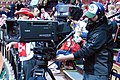 Camera operator in a sports stadium 2023 World Men's Handball Championship
 -
 A football camera operator shoots the Italy national team before a match (2021)
 -
 Camera operator during 2023 European Games
 -
 Cameramen operating Newton stabilized remote heads on spidercam cablecam systems flying over the audience at Metallica tour (2019)
 -
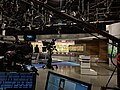 A live TV studio cameraman watches a football game on the monitors in the studio in between broadcasts (2018)
 -
 War camera operator (2006)
 -
 Margery Ordway, one of the first women camera operators of the silent film era (1916)
 -
 A camera operator atop Brandenburg Gate (1926)


References
- ^ Ascher, Steven; Pincus, Edward (2007). "The Shoot". The Filmmaker's Handbook: A Comprehensive Guide for the Digital Age (3rd ed.). Plume. pp. 315-316. ISBN 978-0-452-28678-8. Retrieved 18 April 2019.
- ^ "Before You Shoot: Camera report". kodak.com. Eastman Kodak Company. Archived from the original on 25 March 2020. Retrieved 18 April 2019.
- ^ a b Brown, Blain (2012). "Set Operations". Cinematography: Theory and Practice (2nd ed.). Focal Press. pp. 289-306. ISBN 978-0-240-81209-0. LCCN 2011010755.
- ^ "Occupational Outlook Handbook: Film and Video Editors and Camera Operators". United States Department of Labor, Bureau of Labor Statistics. 2019. Archived from the original on April 18, 2019. Retrieved April 18, 2019.
| International | |
|---|---|
| National | |
| Other | |

Content Disclaimer
Informasi ini disarikan dari Wikipedia dan disajikan kembali untuk tujuan edukasi. Konten tersedia di bawah lisensi CC BY-SA 3.0. Kami tidak bertanggung jawab atas ketidakakuratan data yang bersumber dari kontribusi publik tersebut.
- The information displayed on this website is sourced in part or in whole from Wikipedia and has been adapted for the purpose of restating it. We strive to provide accurate and relevant information, however:
- There is no guarantee of absolute accuracy. Wikipedia is an open, collaborative project that can be edited by anyone, so information is subject to change.
- It is not intended to constitute professional advice. The content displayed is for informational and educational purposes only. For important decisions (e.g., medical, legal, or financial), please consult a professional.
- Content copyright. Wikipedia is licensed under the Creative Commons Attribution-ShareAlike License (CC BY-SA). This means that content may be reused with appropriate attribution and shared under a similar license.
- Responsible use. Any risk arising from the use of information from this website is entirely the responsibility of the user.