Model stimulus–respon
Model stimulus–respons adalah karakterisasi satuan statistis (seperti neuron) sebagai model kotak hitam, yang memprediksi respons kuantitatif terhadap stimulus kuantitatif, misalnya yang dikelola oleh peneliti.
Bidang aplikasi
Model respons–stimulus diaplikasikan dalam hubungan internasional,[1] psikologi,[2] penilaian risiko,[3] ilmu saraf,[4] desain sistem terinspirasi saraf,[5] dan banyak bidang lainnya.
Formulasi matematis
Objek model stimulus–respons bertujuan untuk menetapkan fungsi matematis yang menggambarkan relasi f antara stimulus x dan nilai harapan (atau ukuran lokasi lainnya) dari respons Y:
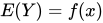
Penyederhanaan umum diasumsikan untuk fungsi yang linear, sehingga diharapkan terlihat hubungan seperti

Teori statistik untuk model linear telah berkembang dengan baik selama lebih dari lima puluh tahun dan bentuk analisis standar yang disebut regresi linear telah dikembangkan.
Referensi
- ^ Greg Cashman (2000). "International Interaction: Stimulus–Response Theory and Arms Races". What causes war?: an introduction to theories of international conflict. Lexington Books. hlm. 160–192. ISBN 978-0-7391-0112-4.
- ^ Stephen P. Kachmar and Kimberly Blair (2007). "Counseling Across the Life Span". Dalam Jocelyn Gregoire and Christin Jungers (ed.). The Counselor's Companion: What Every Beginning Counselor Needs to Know. Routledge. hlm. 143. ISBN 978-0-8058-5684-2.
- ^ Walter W. Piegorsch and A. John Bailer (2005). "Quantitative Risk Assessment with Stimulus–Response Data". Analyzing environmental data. John Wiley and Sons. hlm. 171–214. ISBN 978-0-470-84836-4.
- ^ Geoffrey W. Hoffmann (1988). "Neurons with hysteresis?". Dalam Rodney Cotterill (ed.). Computer simulation in brain science. Cambridge University Press. hlm. 74–87. ISBN 978-0-521-34179-0.
- ^ Teodor Rus (1993). Systems methodology for software. World Scientific. hlm. 12. ISBN 978-981-02-1254-4.
 | Artikel bertopik statistika ini adalah sebuah rintisan. Anda dapat membantu Wikipedia dengan mengembangkannya. |
Content Disclaimer
Informasi ini disarikan dari Wikipedia dan disajikan kembali untuk tujuan edukasi. Konten tersedia di bawah lisensi CC BY-SA 3.0. Kami tidak bertanggung jawab atas ketidakakuratan data yang bersumber dari kontribusi publik tersebut.
- The information displayed on this website is sourced in part or in whole from Wikipedia and has been adapted for the purpose of restating it. We strive to provide accurate and relevant information, however:
- There is no guarantee of absolute accuracy. Wikipedia is an open, collaborative project that can be edited by anyone, so information is subject to change.
- It is not intended to constitute professional advice. The content displayed is for informational and educational purposes only. For important decisions (e.g., medical, legal, or financial), please consult a professional.
- Content copyright. Wikipedia is licensed under the Creative Commons Attribution-ShareAlike License (CC BY-SA). This means that content may be reused with appropriate attribution and shared under a similar license.
- Responsible use. Any risk arising from the use of information from this website is entirely the responsibility of the user.